Technology
Temporary Identity Certificate: Understanding The Lifeline Document

The first time Amina held a temporary identity certificate in her hands, it felt strangely light. After weeks of moving between offices, explaining her story again and again, this single sheet of paper carried a quiet weight. It did not define her forever, but it allowed her to exist in the system again. She could open a bank account, enroll her child in school, and apply for work. For millions of people around the world, a temporary identity certificate is not a technical document. It is a pause button on uncertainty and, in many cases, the first step back into civic and economic life.
In an era shaped by digital platforms, remote work, and cross-border movement, identity has become infrastructure. When permanent identification is unavailable, delayed, or under review, temporary solutions step in to keep lives and systems moving. Understanding the role of a temporary identity certificate is no longer just a bureaucratic concern; it is a strategic issue for governments, institutions, and increasingly, for entrepreneurs and technology leaders building systems that depend on verified identity.
Understanding the Temporary Identity Certificate in Plain Terms
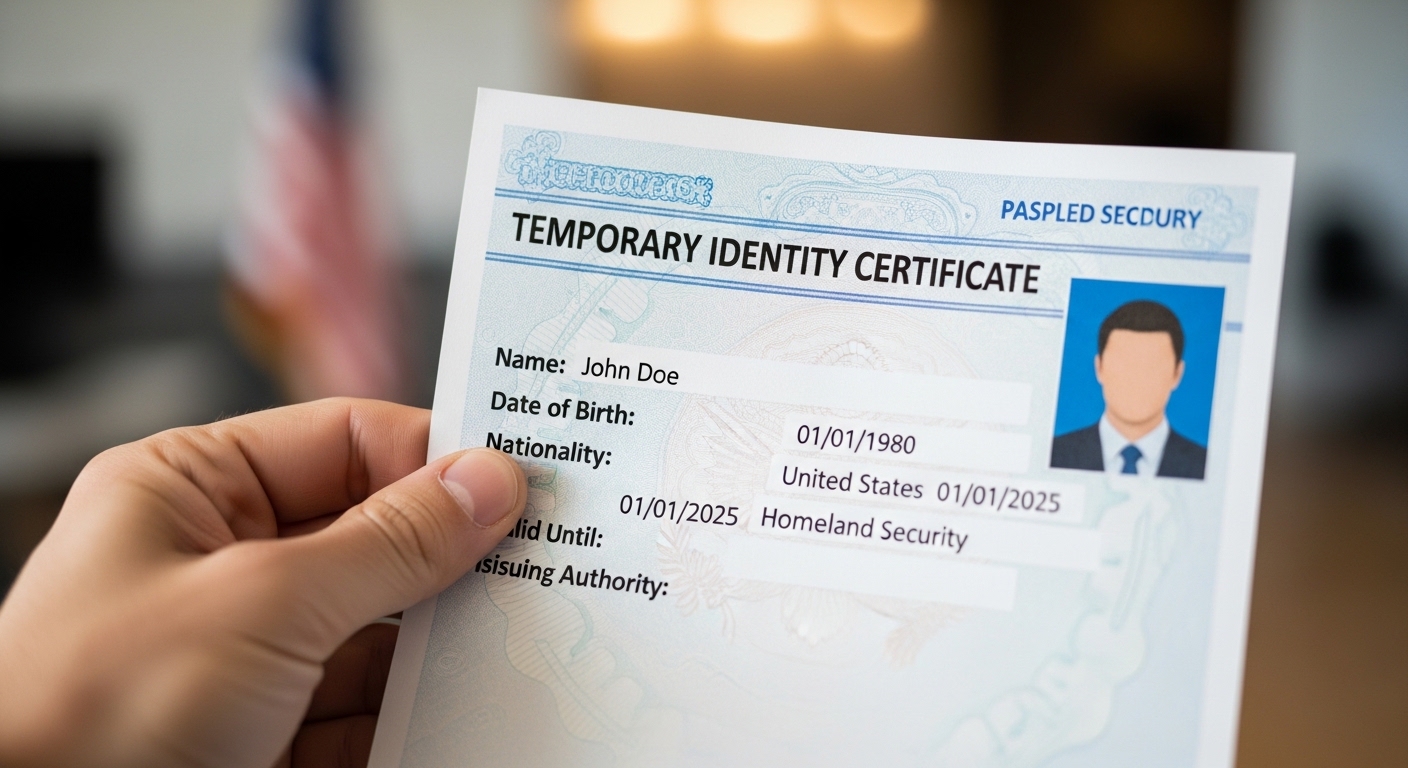
A temporary identity certificate is an official document issued to an individual when standard or permanent identification cannot be immediately provided. Unlike a national ID card or passport, it is designed with a limited lifespan and a specific purpose. It confirms that the holder has been recognized by an authority and is undergoing verification, replacement, or transition within an identity system.
This concept is not new. Temporary papers have long been used in situations involving displacement, administrative backlogs, name changes, or data mismatches. What has changed is the scale and complexity. Today, identity is required not only to cross borders or vote, but to log into digital services, receive payments, access healthcare, and comply with financial regulations. A temporary identity certificate now functions as a compatibility layer between individuals and modern systems that cannot wait for lengthy verification cycles.
For founders and technologists, this matters because identity gaps create friction. When users cannot prove who they are, platforms lose customers, governments face exclusion, and economies slow down. Temporary identity documents exist to reduce that friction without compromising oversight.
Why Temporary Identity Certificates Exist in the First Place
Permanent identity systems are ideal in theory, but reality often intervenes. Documents are lost, destroyed, or delayed. People migrate, flee conflict, or change legal status. Even in stable economies, administrative errors or system upgrades can leave individuals in limbo.
Temporary identity certificates emerge as a pragmatic response to these gaps. They allow authorities to acknowledge an individual’s presence and status while longer processes continue in the background. From a policy perspective, this balances inclusion with control. From a human perspective, it restores dignity and agency during periods of uncertainty.
International organizations have also played a role in shaping how these certificates are used. Agencies such as UNHCR have long relied on temporary documentation to ensure displaced populations can access aid, education, and protection while permanent solutions are negotiated. This approach has influenced national governments and digital identity initiatives worldwide.
Real-World Scenarios Where Temporary Identity Certificates Matter
The value of a temporary identity certificate becomes clear when viewed through everyday situations. Consider a professional whose passport has expired while living abroad. Without valid identification, even routine tasks such as signing a lease or renewing a phone contract can become impossible. A temporary certificate bridges that gap.
In another context, startups onboarding users from emerging markets often encounter inconsistent identity records. A temporary identity certificate can enable compliance with know-your-customer requirements while giving users time to complete full verification. In humanitarian settings, these documents are often the difference between access to healthcare and exclusion.
What unites these scenarios is continuity. Life does not pause while paperwork catches up. Temporary identity certificates exist to ensure systems adapt to people, not the other way around.
The Legal and Administrative Weight Behind a Temporary Document
Despite the word “temporary,” these certificates are not informal. They are issued under legal frameworks that define their scope, validity period, and limitations. Authorities specify what the holder can and cannot do with the document, whether it is valid for travel, employment, or access to public services.
This controlled flexibility is crucial. It prevents misuse while ensuring legitimate holders are not locked out of essential systems. For institutions, temporary certificates reduce pressure on backlogs and improve service delivery. For individuals, they provide clarity in moments when legal status might otherwise feel ambiguous.
From a governance perspective, the temporary nature also creates accountability. Expiry dates and renewal requirements ensure that cases are revisited, updated, and eventually resolved within permanent identity systems.
Temporary Identity Certificates in the Digital Age
As identity increasingly moves online, the role of temporary documentation is evolving. Digital platforms often require instant verification, yet real-world identity processes rarely move at the same speed. This mismatch has pushed innovators to rethink how temporary identity certificates can be issued, validated, and integrated digitally.
Some jurisdictions now issue digital versions of temporary certificates, complete with QR codes or secure verification links. These allow banks, employers, and platforms to confirm authenticity without relying on paper alone. For tech founders, this opens opportunities to design systems that recognize provisional identity states instead of rejecting users outright.
The shift also raises important questions about privacy and data security. Temporary does not mean disposable. Even short-term identity data must be protected, especially when vulnerable populations are involved. The best digital implementations treat temporary identity certificates as first-class credentials, albeit with clearly defined limits.
How Temporary Identity Certificates Support Economic Inclusion
Identity is a prerequisite for participation in modern economies. Without it, individuals cannot open accounts, receive salaries, or formalize businesses. Temporary identity certificates play a subtle but powerful role in preventing people from falling into long-term exclusion due to short-term administrative issues.
For entrepreneurs and founders, this has direct implications. Platforms that accommodate temporary identity credentials can reach underserved markets and build trust with users navigating transitional phases. Governments benefit as well, as economic activity continues rather than stalling during verification delays.
The table below illustrates how temporary identity certificates function across different sectors, highlighting their practical impact.
| Sector | Role of Temporary Identity Certificate | Practical Outcome |
|---|---|---|
| Banking | Enables provisional account access | Reduces financial exclusion |
| Employment | Confirms legal identity during checks | Prevents job offer delays |
| Healthcare | Verifies patient identity | Ensures continuity of care |
| Education | Allows enrollment during documentation gaps | Maintains learning access |
| Digital Platforms | Supports staged user verification | Improves onboarding success |
This cross-sector relevance explains why temporary identity solutions are increasingly discussed not just in policy circles, but in product design and platform governance meetings.
Risks, Limitations, and Common Misconceptions
While valuable, temporary identity certificates are not a cure-all. Their limited validity means they cannot replace permanent identification indefinitely. Misunderstandings often arise when holders assume broader rights than the document grants, or when institutions fail to recognize them due to unfamiliarity.
There is also a risk of fragmentation. If different agencies issue temporary certificates without interoperability, individuals may still face barriers when moving between systems. This is where standardization and digital verification frameworks become essential.
For tech leaders, the key insight is balance. Systems should respect the constraints of temporary identity certificates while maximizing their usefulness. Over-reliance can create dependency; under-recognition can create exclusion.
Designing Systems That Respect Transitional Identity
One of the most forward-looking shifts in identity management is the recognition that identity is not always binary. People move through states: unverified, temporarily verified, fully verified. Temporary identity certificates formalize this reality.
Platforms that acknowledge transitional identity states tend to perform better in diverse markets. They reduce drop-off during onboarding, build goodwill, and demonstrate regulatory awareness. This is especially relevant for founders building fintech, healthtech, or civic technology products where identity verification is both mandatory and complex.
From a strategic standpoint, embracing temporary identity certificates is less about compliance and more about resilience. Systems designed for edge cases often prove stronger in the mainstream.
The Future Outlook for Temporary Identity Certificates
Looking ahead, temporary identity certificates are likely to become more integrated, not less. As global mobility increases and digital services expand, the demand for flexible yet trustworthy identity solutions will grow. We may see greater alignment between physical and digital temporary credentials, supported by interoperable standards.
Artificial intelligence and data matching may shorten the lifespan of temporary certificates by accelerating verification. At the same time, ethical considerations will remain central. Speed should not come at the cost of fairness or privacy.
For entrepreneurs, tech readers, and founders, the takeaway is clear. Identity is no longer a static asset issued once in a lifetime. It is a dynamic relationship between individuals and systems. Temporary identity certificates are a crucial part of that relationship, ensuring continuity when permanence is temporarily out of reach.
Conclusion
A temporary identity certificate does not promise permanence, and that is precisely its strength. It buys time without freezing progress. It acknowledges uncertainty without amplifying it. In a world where access often depends on who you can prove you are, this modest document keeps doors open while the larger system catches up.
For policymakers, it is a tool of inclusion. For technologists, it is a design challenge and an opportunity. And for individuals like Amina, it is a reminder that even temporary recognition can restore momentum and dignity. As identity systems continue to evolve, the temporary identity certificate will remain a quiet but essential bridge between absence and belonging.


In a fast-paced digital world where efficiency determines success, professionals and businesses constantly search for tools that can optimize their workflow without adding complexity. Mutmax emerges as a powerful solution designed to meet this demand, offering a seamless experience that blends simplicity with advanced functionality. Whether you are managing a startup, leading a remote team, or working independently, Mutmax positions itself as a reliable partner in boosting productivity and achieving consistent results.
The concept behind Mutmax is rooted in the idea of eliminating workflow bottlenecks while enhancing collaboration and task management. As organizations face increasing pressure to deliver faster and better outcomes, platforms like Mutmax are becoming essential rather than optional. Its intuitive design and robust features make it accessible to beginners while still offering the depth required by experienced professionals seeking maximum workflow output.
Understanding the Core Philosophy Behind Mutmax
Mutmax is built on the principle that productivity should not come at the cost of user experience. Instead of overwhelming users with complicated systems, it focuses on creating a balanced environment where efficiency and ease coexist. The platform integrates essential tools into a unified system, allowing users to manage tasks, communication, and performance tracking without switching between multiple applications.
At its core, Mutmax emphasizes clarity, structure, and adaptability. It enables users to customize workflows according to their specific needs while maintaining a consistent structure that promotes accountability. This approach not only reduces confusion but also ensures that teams can operate smoothly, even when handling complex projects with multiple stakeholders.
Key Features That Make Mutmax Stand Out
Mutmax distinguishes itself through a carefully curated set of features designed to address real-world productivity challenges. From task automation to intelligent scheduling, every feature is crafted to reduce manual effort and enhance overall efficiency. Users can create workflows that align with their goals, ensuring that every action contributes to measurable outcomes.
Another defining aspect of Mutmax is its integration capability. It connects with various tools and platforms, allowing users to centralize their operations without disrupting existing systems. This flexibility ensures that businesses can adopt Mutmax without undergoing a complete overhaul, making it a practical choice for organizations of all sizes.
Workflow Automation and Its Impact on Productivity
Automation is a cornerstone of Mutmax, enabling users to eliminate repetitive tasks and focus on high-value activities. By automating routine processes, the platform reduces the risk of human error and ensures consistency across workflows. This leads to improved accuracy and faster completion times, which are critical in competitive environments.
The impact of automation extends beyond efficiency. It also enhances employee satisfaction by reducing workload stress and allowing individuals to concentrate on creative and strategic tasks. With Mutmax, automation becomes a tool for empowerment rather than replacement, fostering a more engaged and productive workforce.
Collaboration and Team Management with Mutmax
Effective collaboration is essential for achieving maximum workflow output, and Mutmax provides a comprehensive environment for team interaction. It offers features that facilitate communication, task sharing, and progress tracking, ensuring that everyone stays aligned with project goals. This transparency helps reduce misunderstandings and promotes accountability within teams.
Mutmax also supports remote and hybrid work models by providing real-time updates and centralized information access. Team members can collaborate seamlessly regardless of their location, making it easier to manage distributed teams. This adaptability is particularly valuable in today’s work landscape, where flexibility is a key factor in organizational success.
Data-Driven Insights and Performance Tracking
One of the standout capabilities of Mutmax is its ability to provide actionable insights through data analysis. The platform tracks performance metrics and generates reports that help users identify areas for improvement. This data-driven approach ensures that decisions are based on facts rather than assumptions, leading to more effective strategies.
Performance tracking in Mutmax is designed to be both comprehensive and user-friendly. It presents complex data in an easily understandable format, allowing users to monitor progress without requiring advanced technical knowledge. This accessibility ensures that everyone, from managers to team members, can benefit from the insights provided.
Customization and Scalability of Mutmax
Mutmax is designed to grow with its users, offering a high level of customization that caters to diverse needs. Whether you are managing a small team or a large organization, the platform can be tailored to fit your workflow requirements. This flexibility ensures that users can create an environment that aligns with their unique processes and goals.
Scalability is another key advantage of Mutmax. As businesses expand, their workflow requirements become more complex, and the platform adapts accordingly. It provides the tools needed to manage increased workloads without compromising efficiency, making it a long-term solution for sustained growth.
Comparing Mutmax with Traditional Workflow Tools
Traditional workflow tools often struggle to keep up with the evolving demands of modern workplaces. They tend to be rigid, requiring users to adapt to predefined structures rather than offering flexibility. In contrast, Mutmax prioritizes user-centric design, allowing individuals and teams to shape their workflows according to their needs.
Another significant difference lies in integration and usability. While traditional tools may require extensive setup and training, Mutmax offers a more intuitive experience with minimal learning curve. This ease of use makes it accessible to a broader audience, enabling faster adoption and immediate productivity gains.
Practical Applications of Mutmax in Different Industries
Mutmax is versatile enough to be used across various industries, each benefiting from its unique features. In the tech sector, it helps streamline development processes and manage complex projects. In marketing, it enhances campaign coordination and performance tracking, ensuring that teams can execute strategies effectively.
In industries such as healthcare and education, Mutmax provides a structured approach to managing workflows and improving communication. Its adaptability allows it to address specific challenges in different fields, making it a valuable tool for organizations seeking to optimize their operations.
Table: Key Benefits of Using Mutmax
| Feature Area | Benefit Description | Impact on Workflow Output |
|---|---|---|
| Automation | Reduces repetitive tasks and manual errors | High |
| Collaboration | Enhances team communication and coordination | High |
| Data Insights | Provides actionable performance metrics | Medium to High |
| Customization | Adapts to specific workflow requirements | High |
| Scalability | Supports growth without compromising efficiency | High |
The table above highlights how Mutmax addresses critical aspects of workflow management. Each feature contributes to improving efficiency and ensuring that users can achieve their goals with minimal friction. By combining these elements, Mutmax creates a comprehensive solution for maximizing productivity.
Challenges and Considerations When Using Mutmax
While Mutmax offers numerous advantages, it is important to consider potential challenges during implementation. Users may need time to fully understand its features and integrate them into existing workflows. Proper training and onboarding can help overcome this initial learning curve and ensure a smooth transition.
Another consideration is the need for consistent usage. To fully benefit from Mutmax, teams must adopt it as a central part of their workflow rather than using it sporadically. This commitment ensures that all features are utilized effectively, leading to better results and improved efficiency over time.
Future Potential and Innovations in Mutmax
The future of Mutmax looks promising as it continues to evolve in response to user needs and technological advancements. With the integration of artificial intelligence and machine learning, the platform is expected to offer even more sophisticated features that enhance productivity and decision-making.
Innovations in automation and data analytics will further strengthen Mutmax’s position as a leading workflow platform. By staying ahead of industry trends, it ensures that users can rely on it for long-term success. This forward-thinking approach makes Mutmax not just a tool, but a strategic asset for organizations aiming to achieve maximum workflow output.
Conclusion
Mutmax stands out as a comprehensive platform that addresses the challenges of modern workflow management. Its combination of automation, collaboration, and data-driven insights creates a powerful environment for achieving maximum productivity. By focusing on user experience and adaptability, it ensures that individuals and teams can work efficiently without unnecessary complexity.
As businesses continue to navigate an increasingly competitive landscape, the importance of effective workflow management cannot be overstated. Mutmax provides the tools and capabilities needed to stay ahead, making it an essential solution for anyone looking to optimize their output and achieve sustainable success. Its ability to adapt, scale, and innovate positions it as the ultimate platform for maximum workflow output.