
Technology
Priority Infrastructure Plan: A Strategic Roadmap for Sustainable Growth

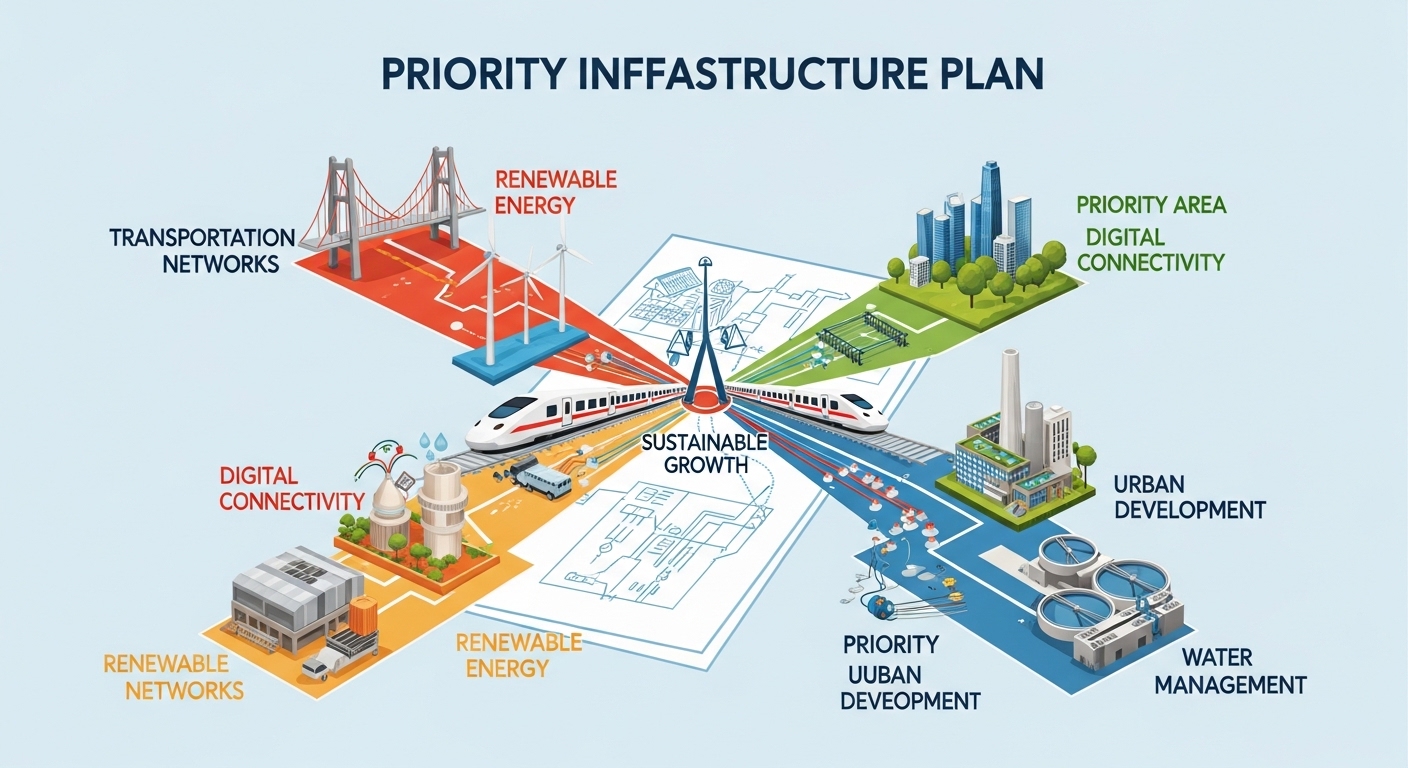
The train station in a fast-growing city tells a familiar story. Ten years ago, it handled a fraction of today’s passengers. Now, platforms strain under demand, signals lag behind modern standards, and every delay ripples across businesses, families, and supply chains. This is how infrastructure quietly reveals its importance—not when it works, but when it struggles to keep up. A priority infrastructure plan is the strategic response to moments like this, turning pressure points into long-term opportunities and ensuring that growth does not outpace the systems meant to support it.
Understanding the Meaning of a Priority Infrastructure Plan
At its core, a priority infrastructure plan is a deliberate framework for deciding what to build, upgrade, or maintain first when resources are limited and expectations are high. Rather than spreading investment thinly across countless projects, it focuses attention on assets that deliver the greatest economic, social, and technological return. Roads, ports, energy grids, digital networks, water systems, and public facilities are evaluated not just on current need, but on future relevance.
For entrepreneurs and founders, this matters more than it may appear at first glance. Infrastructure choices influence logistics costs, workforce mobility, energy reliability, and digital access. A well-designed plan aligns public investment with private innovation, creating conditions where businesses can scale confidently instead of compensating for systemic weaknesses.
Why Timing Matters More Than Ever
Infrastructure planning has always been important, but today it carries new urgency. Urbanization, climate pressures, demographic shifts, and rapid technological change have compressed timelines. Assets designed decades ago are expected to perform roles they were never built for. A priority infrastructure plan acknowledges this reality by sequencing investments according to risk, impact, and adaptability.
Real-world relevance comes into focus when supply chains stall or energy shortages disrupt production. These moments expose the cost of delayed decisions. Forward-looking plans treat infrastructure as a living system, one that must evolve continuously rather than in sporadic bursts of funding and attention.
Economic Growth and Competitive Advantage
Infrastructure is often described as the backbone of an economy, but a priority infrastructure plan turns that metaphor into strategy. When transport corridors are efficient, goods move faster and cheaper. When energy systems are resilient, manufacturers operate without costly interruptions. When digital infrastructure is robust, startups can compete globally from day one.
The competitive advantage created by such planning is cumulative. Businesses cluster where infrastructure supports their ambitions, talent follows opportunity, and innovation ecosystems take root. Over time, regions with coherent plans pull ahead, not because they spend more, but because they spend smarter.
Digital Infrastructure as a Modern Priority
In earlier eras, infrastructure planning revolved around physical assets. Today, digital connectivity stands alongside highways and power plants as a foundational necessity. A priority infrastructure plan increasingly treats broadband networks, data centers, and smart systems as essential public goods.
For tech readers and founders, this shift is especially significant. Cloud computing, remote collaboration, artificial intelligence, and e-commerce all depend on reliable digital backbones. Planning that prioritizes digital access reduces inequality between regions and unlocks new markets that were previously constrained by geography.
Sustainability and Resilience in Planning
No modern priority infrastructure plan can ignore sustainability. Climate-related disruptions have shown that infrastructure must not only support growth, but withstand shocks. Flood-resistant transport networks, decentralized energy systems, and efficient water management are no longer optional considerations.
Resilience also has a financial dimension. Assets designed with long-term environmental realities in mind tend to cost less over their lifespan, even if upfront investment is higher. For policymakers and investors alike, this reframes sustainability from an ethical add-on to a core component of fiscal responsibility.
Governance, Transparency, and Trust
The success of a priority infrastructure plan depends as much on governance as on engineering. Clear criteria for project selection, transparent funding mechanisms, and measurable outcomes build trust among stakeholders. When businesses understand why certain projects move forward while others wait, uncertainty decreases and collaboration improves.
Entrepreneurs benefit directly from this clarity. Predictable infrastructure pipelines allow companies to plan expansions, choose locations, and commit capital with greater confidence. In contrast, opaque decision-making often leads to misaligned investments and missed opportunities.
How Priorities Are Typically Evaluated
While every region has unique needs, most priority infrastructure plans rely on a combination of economic analysis, social impact assessment, and technical feasibility. Projects are ranked based on their ability to unlock productivity, improve quality of life, and adapt to future demand.
The table below illustrates a simplified view of how different infrastructure categories are often assessed within a priority framework, highlighting why certain investments rise to the top.
| Infrastructure Category | Primary Impact Area | Long-Term Value Driver |
|---|---|---|
| Transportation Networks | Trade and mobility | Reduced logistics cost |
| Energy Systems | Industrial stability | Reliability and scale |
| Digital Connectivity | Innovation and access | Network effects |
| Water and Sanitation | Public health | Urban resilience |
| Public Facilities | Human capital | Workforce productivity |
This kind of structured comparison helps decision-makers move beyond political cycles and focus on enduring value.
The Role of the Private Sector
A priority infrastructure plan does not exist in isolation from the private sector. In many cases, it actively invites private participation through partnerships, concessions, or co-investment models. When risks and rewards are clearly defined, private capital can accelerate delivery and introduce innovation.
For founders, this opens unexpected avenues. Infrastructure projects generate demand for technology, services, and specialized expertise. From smart monitoring systems to logistics platforms, businesses that align their offerings with public priorities often find stable, long-term growth opportunities.
Avoiding the Pitfalls of Short-Term Thinking
One of the greatest challenges in infrastructure planning is the temptation to favor visible, short-term wins over less glamorous but more impactful investments. A priority infrastructure plan counters this by anchoring decisions in evidence rather than headlines.
This discipline matters because infrastructure choices shape decades of outcomes. Underinvesting in maintenance, for example, may free up funds today but multiplies costs tomorrow. Plans that balance new construction with asset care tend to deliver better returns and fewer crises.
Infrastructure as a Signal to Innovators
Beyond its functional role, infrastructure sends a powerful signal. When a region commits to modern systems and clear priorities, it communicates seriousness about growth and innovation. Startups and investors read these signals closely, often interpreting them as indicators of long-term stability.
In this sense, a priority infrastructure plan is also a narrative tool. It tells a story about where a society is heading, what it values, and how it intends to compete in a crowded global landscape.
The Future of Priority Infrastructure Planning
As technology advances, infrastructure planning itself is becoming more sophisticated. Data-driven modeling, real-time monitoring, and scenario analysis allow planners to test assumptions and adjust priorities dynamically. This evolution makes plans less rigid and more responsive to change.
For tech leaders and entrepreneurs, this creates a virtuous cycle. Better infrastructure supports innovation, and innovation, in turn, enhances infrastructure performance. The line between public systems and private solutions continues to blur, reshaping how value is created and shared.
Conclusion
A priority infrastructure plan is not merely a list of projects; it is an expression of intent. It reflects choices about growth, resilience, and opportunity. When crafted with foresight and executed with discipline, it becomes a quiet force multiplier for economies and innovators alike.
The cities and regions that thrive in the coming decades will not be those that build the most, but those that build what matters most, at the right time, and for the right reasons. Infrastructure, when prioritized wisely, stops being a constraint and starts becoming a catalyst.


In a fast-paced digital world where efficiency determines success, professionals and businesses constantly search for tools that can optimize their workflow without adding complexity. Mutmax emerges as a powerful solution designed to meet this demand, offering a seamless experience that blends simplicity with advanced functionality. Whether you are managing a startup, leading a remote team, or working independently, Mutmax positions itself as a reliable partner in boosting productivity and achieving consistent results.
The concept behind Mutmax is rooted in the idea of eliminating workflow bottlenecks while enhancing collaboration and task management. As organizations face increasing pressure to deliver faster and better outcomes, platforms like Mutmax are becoming essential rather than optional. Its intuitive design and robust features make it accessible to beginners while still offering the depth required by experienced professionals seeking maximum workflow output.
Understanding the Core Philosophy Behind Mutmax
Mutmax is built on the principle that productivity should not come at the cost of user experience. Instead of overwhelming users with complicated systems, it focuses on creating a balanced environment where efficiency and ease coexist. The platform integrates essential tools into a unified system, allowing users to manage tasks, communication, and performance tracking without switching between multiple applications.
At its core, Mutmax emphasizes clarity, structure, and adaptability. It enables users to customize workflows according to their specific needs while maintaining a consistent structure that promotes accountability. This approach not only reduces confusion but also ensures that teams can operate smoothly, even when handling complex projects with multiple stakeholders.
Key Features That Make Mutmax Stand Out
Mutmax distinguishes itself through a carefully curated set of features designed to address real-world productivity challenges. From task automation to intelligent scheduling, every feature is crafted to reduce manual effort and enhance overall efficiency. Users can create workflows that align with their goals, ensuring that every action contributes to measurable outcomes.
Another defining aspect of Mutmax is its integration capability. It connects with various tools and platforms, allowing users to centralize their operations without disrupting existing systems. This flexibility ensures that businesses can adopt Mutmax without undergoing a complete overhaul, making it a practical choice for organizations of all sizes.
Workflow Automation and Its Impact on Productivity
Automation is a cornerstone of Mutmax, enabling users to eliminate repetitive tasks and focus on high-value activities. By automating routine processes, the platform reduces the risk of human error and ensures consistency across workflows. This leads to improved accuracy and faster completion times, which are critical in competitive environments.
The impact of automation extends beyond efficiency. It also enhances employee satisfaction by reducing workload stress and allowing individuals to concentrate on creative and strategic tasks. With Mutmax, automation becomes a tool for empowerment rather than replacement, fostering a more engaged and productive workforce.
Collaboration and Team Management with Mutmax
Effective collaboration is essential for achieving maximum workflow output, and Mutmax provides a comprehensive environment for team interaction. It offers features that facilitate communication, task sharing, and progress tracking, ensuring that everyone stays aligned with project goals. This transparency helps reduce misunderstandings and promotes accountability within teams.
Mutmax also supports remote and hybrid work models by providing real-time updates and centralized information access. Team members can collaborate seamlessly regardless of their location, making it easier to manage distributed teams. This adaptability is particularly valuable in today’s work landscape, where flexibility is a key factor in organizational success.
Data-Driven Insights and Performance Tracking
One of the standout capabilities of Mutmax is its ability to provide actionable insights through data analysis. The platform tracks performance metrics and generates reports that help users identify areas for improvement. This data-driven approach ensures that decisions are based on facts rather than assumptions, leading to more effective strategies.
Performance tracking in Mutmax is designed to be both comprehensive and user-friendly. It presents complex data in an easily understandable format, allowing users to monitor progress without requiring advanced technical knowledge. This accessibility ensures that everyone, from managers to team members, can benefit from the insights provided.
Customization and Scalability of Mutmax
Mutmax is designed to grow with its users, offering a high level of customization that caters to diverse needs. Whether you are managing a small team or a large organization, the platform can be tailored to fit your workflow requirements. This flexibility ensures that users can create an environment that aligns with their unique processes and goals.
Scalability is another key advantage of Mutmax. As businesses expand, their workflow requirements become more complex, and the platform adapts accordingly. It provides the tools needed to manage increased workloads without compromising efficiency, making it a long-term solution for sustained growth.
Comparing Mutmax with Traditional Workflow Tools
Traditional workflow tools often struggle to keep up with the evolving demands of modern workplaces. They tend to be rigid, requiring users to adapt to predefined structures rather than offering flexibility. In contrast, Mutmax prioritizes user-centric design, allowing individuals and teams to shape their workflows according to their needs.
Another significant difference lies in integration and usability. While traditional tools may require extensive setup and training, Mutmax offers a more intuitive experience with minimal learning curve. This ease of use makes it accessible to a broader audience, enabling faster adoption and immediate productivity gains.
Practical Applications of Mutmax in Different Industries
Mutmax is versatile enough to be used across various industries, each benefiting from its unique features. In the tech sector, it helps streamline development processes and manage complex projects. In marketing, it enhances campaign coordination and performance tracking, ensuring that teams can execute strategies effectively.
In industries such as healthcare and education, Mutmax provides a structured approach to managing workflows and improving communication. Its adaptability allows it to address specific challenges in different fields, making it a valuable tool for organizations seeking to optimize their operations.
Table: Key Benefits of Using Mutmax
| Feature Area | Benefit Description | Impact on Workflow Output |
|---|---|---|
| Automation | Reduces repetitive tasks and manual errors | High |
| Collaboration | Enhances team communication and coordination | High |
| Data Insights | Provides actionable performance metrics | Medium to High |
| Customization | Adapts to specific workflow requirements | High |
| Scalability | Supports growth without compromising efficiency | High |
The table above highlights how Mutmax addresses critical aspects of workflow management. Each feature contributes to improving efficiency and ensuring that users can achieve their goals with minimal friction. By combining these elements, Mutmax creates a comprehensive solution for maximizing productivity.
Challenges and Considerations When Using Mutmax
While Mutmax offers numerous advantages, it is important to consider potential challenges during implementation. Users may need time to fully understand its features and integrate them into existing workflows. Proper training and onboarding can help overcome this initial learning curve and ensure a smooth transition.
Another consideration is the need for consistent usage. To fully benefit from Mutmax, teams must adopt it as a central part of their workflow rather than using it sporadically. This commitment ensures that all features are utilized effectively, leading to better results and improved efficiency over time.
Future Potential and Innovations in Mutmax
The future of Mutmax looks promising as it continues to evolve in response to user needs and technological advancements. With the integration of artificial intelligence and machine learning, the platform is expected to offer even more sophisticated features that enhance productivity and decision-making.
Innovations in automation and data analytics will further strengthen Mutmax’s position as a leading workflow platform. By staying ahead of industry trends, it ensures that users can rely on it for long-term success. This forward-thinking approach makes Mutmax not just a tool, but a strategic asset for organizations aiming to achieve maximum workflow output.
Conclusion
Mutmax stands out as a comprehensive platform that addresses the challenges of modern workflow management. Its combination of automation, collaboration, and data-driven insights creates a powerful environment for achieving maximum productivity. By focusing on user experience and adaptability, it ensures that individuals and teams can work efficiently without unnecessary complexity.
As businesses continue to navigate an increasingly competitive landscape, the importance of effective workflow management cannot be overstated. Mutmax provides the tools and capabilities needed to stay ahead, making it an essential solution for anyone looking to optimize their output and achieve sustainable success. Its ability to adapt, scale, and innovate positions it as the ultimate platform for maximum workflow output.