
Business
Business Vertical Classification Categories: How Markets Organize Themselves to Compete and Grow

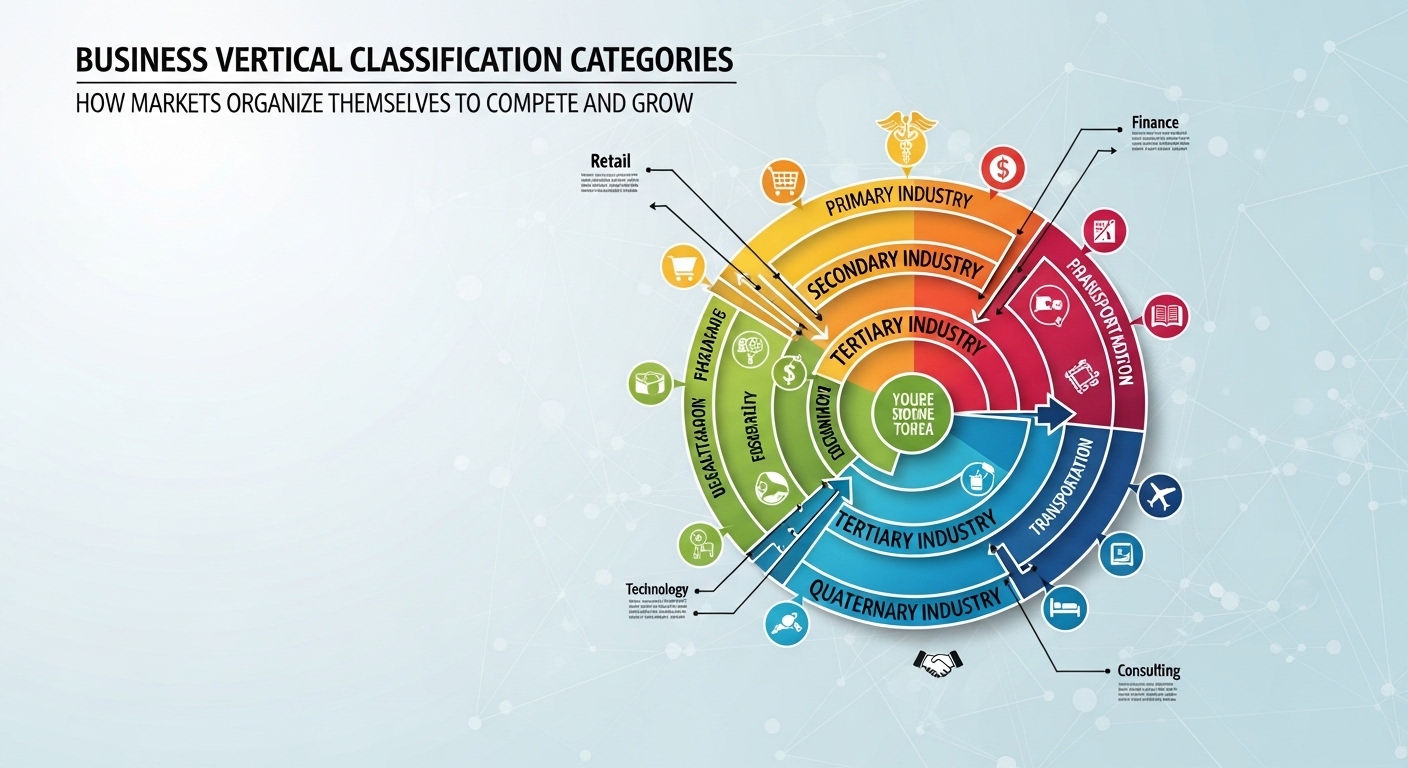
The first time a founder realizes their business doesn’t quite fit into an existing box is often a turning point. A partner wants to know which industry benchmarks apply. A customer compares you to companies you’ve never thought of as competitors. In that moment, the abstract idea of business vertical classification categories becomes very real. These categories are not just labels used in pitch decks or reports; they are the mental maps that shape how markets understand value, competition, and opportunity.
In today’s increasingly complex economy, where technology blurs traditional boundaries, understanding how business vertical classification categories work has become essential for entrepreneurs, tech readers, and founders. They influence everything from strategy and funding to product design and marketing, often in subtle but powerful ways.
Understanding the Concept of Business Vertical Classification Categories
At its core, business vertical classification categories are a way of grouping companies based on the specific industries or markets they serve. Unlike horizontal classifications, which focus on functions such as marketing tools or payment systems used across many industries, vertical classifications narrow in on the domain itself. Healthcare, fintech, education, agriculture, logistics, and real estate are all examples of verticals that define the context in which a business operates.
These categories emerged as markets grew more specialized. As industries matured, stakeholders needed clearer language to describe where a business fit and what problems it solved. Over time, vertical classification became a shared shorthand used by analysts, investors, regulators, and customers. When someone hears that a startup operates in the healthcare vertical, they immediately infer regulatory complexity, data sensitivity, and long sales cycles.
Why Vertical Classification Matters in the Real World
Business vertical classification categories matter because they shape expectations. Investors compare you against others in your vertical when evaluating growth rates or margins. Customers assess trust and relevance based on whether you appear to understand their industry. Even internal teams make decisions differently depending on the vertical context they believe they are operating in.
For founders, the vertical you choose to emphasize can open or close doors. A company that frames itself as a general software provider may struggle to stand out, while the same product positioned as a specialized solution for logistics or education may instantly feel more credible. Vertical classification also affects pricing strategies, compliance requirements, and go-to-market approaches, making it far more than a theoretical exercise.
The Evolution of Business Vertical Classification Categories
Historically, business verticals aligned closely with traditional industries such as manufacturing, retail, finance, and healthcare. These categories were relatively stable and slow to change. However, digital transformation disrupted this clarity. Cloud computing, artificial intelligence, and platforms created businesses that served multiple industries simultaneously.
In response, business vertical classification categories evolved. Sub-verticals emerged, such as healthtech within healthcare or edtech within education. New labels formed around customer type rather than product, such as B2B SaaS for finance teams or platforms for creators. This evolution reflects a broader truth: vertical classification is not fixed. It adapts as markets, technologies, and customer needs change.
Core Business Vertical Classification Categories in Modern Markets
While no single list can capture every nuance, most businesses today still fall into recognizable vertical categories. Technology-driven companies often align themselves with fintech, healthtech, or proptech to signal focus. Traditional sectors like agriculture or manufacturing now include digitally enabled sub-verticals that blend old and new models.
What defines these categories is not just the product, but the problem space. A payments platform serving online retailers belongs to a different vertical than one serving hospitals, even if the underlying technology is similar. This distinction is why vertical classification remains relevant despite technological convergence.
Comparing Major Business Vertical Classification Categories
The table below highlights how several common business vertical classification categories differ in terms of customers, challenges, and strategic focus. It illustrates why vertical context matters when building and scaling a company.
| Business Vertical | Primary Customers | Key Challenges | Strategic Focus |
|---|---|---|---|
| Healthcare | Hospitals, clinics, patients | Regulation, data privacy | Compliance, trust, outcomes |
| Fintech | Consumers, businesses | Security, regulation | Speed, reliability, scale |
| Education | Schools, learners, institutions | Adoption, outcomes | Accessibility, engagement |
| Logistics | Shippers, retailers | Efficiency, coordination | Optimization, visibility |
| Real Estate | Buyers, sellers, agents | Market cycles, trust | Transparency, experience |
This comparison shows how business vertical classification categories influence priorities. A fintech startup obsessed with speed might fail in healthcare, where compliance and trust dominate decision-making.
Vertical Classification and Startup Strategy
For startups, choosing the right business vertical classification category is often a strategic decision rather than a purely descriptive one. Early-stage companies may serve multiple industries but benefit from focusing on one vertical to build credibility and traction. This focus helps refine messaging, tailor features, and develop deeper expertise.
As companies grow, they sometimes expand into adjacent verticals. This expansion is smoother when the original vertical classification is well-defined. Investors and partners can more easily understand how the business is evolving, rather than seeing it as unfocused or opportunistic.
How Investors Use Business Vertical Classification Categories
Investors rely heavily on business vertical classification categories to make sense of opportunity and risk. Each vertical has typical growth patterns, margin expectations, and exit paths. A SaaS company in the education vertical may be evaluated differently than one in enterprise finance, even if revenue numbers look similar.
Vertical classification also helps investors build balanced portfolios. They may avoid overexposure to one vertical or actively seek diversification across industries. For founders, understanding this perspective can improve fundraising conversations and help align expectations early.
Vertical Categories in Marketing and Branding
Marketing strategies are deeply shaped by business vertical classification categories. The language, channels, and proof points that resonate in one vertical may fall flat in another. A logistics audience cares about efficiency metrics and reliability, while an education audience responds to impact and accessibility.
Branding benefits from clear vertical alignment as well. When a company consistently communicates its vertical focus, it becomes easier for customers to recognize its relevance. Over time, strong brands can even redefine their vertical, influencing how the category itself is understood.
The Blurring of Vertical Boundaries
One of the most interesting trends in recent years is the blurring of traditional business vertical classification categories. Platforms increasingly serve multiple industries, and customers expect integrated solutions rather than siloed tools. This has led to hybrid verticals and new classifications that reflect customer journeys instead of industry lines.
While this blurring creates opportunity, it also introduces complexity. Companies must decide whether to emphasize breadth or depth, and how to communicate their value without confusing the market. Clear storytelling becomes essential when vertical boundaries are no longer obvious.
Choosing and Communicating Your Vertical Identity
Choosing how to position your business within vertical classification categories requires honesty and foresight. It is tempting to chase trends or adopt fashionable labels, but misalignment can damage credibility. The most effective companies choose a vertical identity that reflects their core strengths and customer reality, even as they remain flexible for future growth.
Communication matters just as much as choice. Founders who can clearly articulate why their business belongs in a particular vertical, and what that means for customers, stand out in crowded markets. This clarity builds trust and simplifies decision-making for everyone involved.
The Future of Business Vertical Classification Categories
Looking ahead, business vertical classification categories will continue to evolve alongside technology and society. New verticals will emerge around sustainability, digital identity, and decentralized systems. Existing categories will fragment into more specialized niches, reflecting increasingly sophisticated customer needs.
At the same time, the fundamental purpose of vertical classification will remain unchanged. It will continue to serve as a shared language that helps markets understand who a business serves, what problems it solves, and how it creates value.
Conclusion
Business vertical classification categories are more than industry labels. They are lenses through which markets interpret strategy, credibility, and potential. For entrepreneurs and founders, understanding these categories is a way of understanding how the world sees their business.
The companies that succeed are often those that use vertical classification thoughtfully, not rigidly. They respect the expectations of their chosen vertical while pushing its boundaries with innovation. In doing so, they don’t just fit into a category; they help shape what that category becomes.

For businesses that handle vast amounts of data, LDAP (Lightweight Directory Access Protocol) integration can significantly streamline search processes. By enabling efficient user and resource directory searches, LDAP can enhance productivity and data security. To maximize these benefits, companies should carefully consider how LDAP aligns with their operational needs and current systems.
Implementing LDAP integration can empower employees with faster access to essential information, thereby improving decision-making and customer service. Below, we delve into critical aspects that business owners should evaluate when integrating LDAP to boost search functionality within their organizations.
Assessing Your Business’s LDAP Integration Needs for Enhanced Search Functionality

When considering LDAP integration, it’s important to establish the specific search requirements of your business. Determine whether LDAP will primarily serve internal staff directories, customer databases, inventory systems, or a combination of these. Identifying these needs sets the foundation for tailored LDAP solutions that align with business objectives.
Moreover, understanding the scope of data and the anticipated volume of search queries helps to estimate the scale of the LDAP deployment. Larger enterprises may require more robust LDAP setups to handle heavy search traffic without compromising performance. Conversely, small to medium-sized businesses can often opt for lighter implementations that still provide significant search enhancements.
To ensure a successful integration, start by conducting an audit of your existing data infrastructure and search platforms. ldap integration for search Evaluate how LDAP integration will fit into your environment and plan accordingly. This assessment should also encompass compliance with industry regulations and data protection standards.
Navigating LDAP Integration Challenges and Solutions for Business Search Enhancement
Implementing LDAP for enhanced search can present challenges, such as data migration, system compatibility, and user training. Careful planning and the right technical expertise can help alleviate these obstacles, ensuring a seamless integration process.
One common issue is ensuring compatibility with current systems. If your existing search platform isn’t designed to work with LDAP, you might encounter integration difficulties. To address this, seek out middleware solutions or platform-specific extensions that facilitate LDAP connectivity. Additionally, your integration strategy should include thorough testing to detect and resolve potential conflicts early on.
Ensuring that employees understand how to utilize the new LDAP-enhanced search functionality is crucial for realizing its benefits. Develop comprehensive training programs and resources to help staff adapt to the new system. Clear communication and support can prevent disruptions and maximize user adoption and efficiency.
Implementing LDAP with Existing Business Search Platforms: Best Practices
For businesses seeking to leverage LDAP with their current search platforms, best practices revolve around compatibility, scalability, and security. Begin by selecting an LDAP solution that integrates smoothly with your existing platform, minimizing the need for extensive customizations.
Scalability should also be a top priority, ensuring that the LDAP solution can grow with your business needs. Evaluate providers based on their track record of scaling solutions for businesses of a similar size and complexity to yours. Additionally, prioritize solutions offering advanced security features to protect sensitive data and comply with regulations.
Employ a phased approach to implementation, starting small and expanding as you confirm system stability and performance. Such a strategy helps in identifying issues early and allows for adjustments before rolling out LDAP integration across the entire organization. Importantly, make sure to document the process extensively for future reference and auditing purposes.
Monitoring and Maintaining LDAP Integration for Optimal Search Performance in Business Operations
After implementing LDAP, continuous monitoring is vital in ensuring it continues to meet search performance standards. Regularly check the responsiveness and accuracy of LDAP-enabled searches to detect any potential degradation in service over time. This vigilance helps maintain the benefits of LDAP integration for your business operations.
Regular maintenance and updates are also key to the ongoing success of LDAP-integrated search systems. Stay informed about the latest LDAP advancements and software updates that can further enhance search capabilities or rectify known issues. Establishing a schedule for routine maintenance prevents unexpected downtimes and keeps the system secure against emerging threats.
Finally, be prepared to iterate and refine your LDAP implementation based on feedback and observed performance metrics. This might involve reconfiguring LDAP attributes or indexes to optimize search efficiency or improving system architecture to support growing data volume. Active management ensures LDAP remains a valuable asset in your business’s search infrastructure.
Ultimately, LDAP integration can be a strategic move for business owners looking to enhance search functionality within their operations. By understanding business needs, addressing integration challenges, following best practices, and maintaining the system, companies can realize considerable benefits. These include improved search efficiency, secure data access, and streamlined workflows, all pivotal in maintaining a competitive edge.

For many businesses, the integration of efficient file-sharing systems is no longer a luxury but a necessity for day-to-day operations. A Harvard Business Review survey showed that organizations emphasizing collaboration through integrated file-sharing tools increased productivity by as much as 30%. As digital workspaces become increasingly prevalent, setting up a robust system for file sharing that aligns with an organization’s workflow and processes is vital. In this article, we’ll delve into the pivotal factors that business owners should consider as they navigate the complexities of file sharing integrations.
From ensuring the security of sensitive data to maintaining regulatory compliance, the integration of file sharing services into existing IT infrastructure presents multiple challenges but also opportunities for enhanced collaboration and efficiency. Below, discover key considerations that can make the transition to an integrated file-sharing solution smoother and more aligned with your business needs.
Assessing Your Business Needs for File Share Integration

Prioritizing the assessment of business needs sets the stage for successful file share integration. This involves defining the specific objectives you aim to achieve, such as improved team collaboration, streamlined workflow, or faster access to shared resources.
Take stock of the current IT infrastructure, collaboration patterns, and any existing gaps in communication that could be bridged by an integrated file sharing system. For instance, if your teams often work with large multimedia files, identifying a solution that supports high-speed data transfer and storage is essential.
file share integrations for search Actionable guidance begins with thorough market research. Compare the capabilities of various file share platforms, focusing on those that offer customization options to suit your particular business needs. It’s effective to create a checklist of features and metrics, such as user-friendliness, scalability, and compatibility with your infrastructure, which you can measure against each option.
Evaluating Security and Compliance in File Sharing Solutions
Security and compliance should be at the forefront of any file-sharing solution integration. Breaching data security or failing to comply with regulations can lead to significant fines and loss of customer trust.
Detailed scrutiny of security certifications and compliance standards is crucial. For example, a cloud-based file sharing service should ideally be compliant with industry standards like GDPR for European customers or HIPAA for healthcare-related information in the US. Verify that encryption protocols and secure authentication methods are used to protect data at rest and in transit.
Actionable guidance comes in the form of creating a comprehensive security policy that addresses all aspects of file sharing within your organization. Training employees on best practices and conducting regular security audits can also fortify your defenses against breaches. For insight into the latest security trends, consult an authoritative source such as data security enhancements.
Understanding Integration Options for Seamless File Sharing
Delving into the integration options available is key to achieving seamless file sharing. Whether you are incorporating file sharing into an existing software ecosystem or starting from scratch, understanding the technical aspects is crucial.
Many file-sharing services provide APIs that enable custom integrations with your current business applications, like CRM or ERP systems. This can result in a more cohesive environment where data flows smoothly between platforms without the need for manual file transfers, which can be a major efficiency booster.
Actionable guidance involves working closely with IT professionals or integration specialists who can help you understand the trade-offs of different approaches. Whether it’s cloud, on-premises, or hybrid solutions, aligning your choices with your IT roadmap can save you from future compatibility or scalability headaches. Ensure that the chosen solution can seamlessly integrate with the productivity suites most commonly used by your teams.
Navigating the Challenges of File Share Integration in Business Operations
Integrating a new file sharing solution into business operations presents several challenges, including employee adoption, workflow disruptions, and the potential for data silos. Identifying these challenges early can lead to smoother implementation and operation.
Employee resistance to change is natural, so it’s important to facilitate a transition plan that includes ample training, support, and a feedback mechanism. By showcasing the benefits and demonstrating how the new system simplifies tasks, you can foster smoother adoption and integration into daily work routines.
Actionable guidance revolves around carefully planning the rollout of the new system, starting with a pilot program that lets you identify issues and user concerns before a full-scale implementation. Keeping lines of communication open, and making adjustments based on feedback, can mitigate the impact of the transition on ongoing operations.
Ultimately, while file share integration can appear daunting, a strategic approach addressing these key areas—business objectives alignment, security and compliance, seamless integration options, and effective navigation of operational challenges—can make the process manageable and worthwhile. Through careful planning, diligent research, and ongoing oversight, business owners can harness the power of file sharing to boost productivity and enhance collaboration across their organizations.

Concrete is one of those things most people don’t think about—until it goes wrong.
A driveway cracks too early. A patio starts shifting. Water begins pooling where it shouldn’t. At that point, what seemed like a simple project turns into something much bigger.
That’s why choosing an experienced concrete contractor in Calgary matters more than most homeowners realize. The visible result is only part of the equation—the real quality is in everything that happens before and during the pour.
The Foundation Is Everything
Every solid concrete project starts below the surface.
Before any concrete is poured, proper preparation needs to happen:
excavation and grading
compacted base installation
reinforcement placement
drainage considerations
If any of these steps are rushed or skipped, the finished surface might look fine initially—but it won’t hold up over time.
In Calgary especially, with freeze-thaw cycles and shifting ground conditions, base preparation isn’t optional. It’s what determines whether the concrete lasts or fails.
Climate Matters More Than People Think
Concrete behaves differently depending on the environment.
Calgary’s climate brings:
cold winters
rapid temperature swings
moisture variation
All of these affect curing, expansion, and long-term durability.
That’s why experienced crews adjust how they:
mix concrete
time pours
manage curing conditions
protect surfaces after installation
It’s not just about placing concrete—it’s about understanding how it will perform months and years later.
Not All Concrete Work Is the Same
A lot of homeowners assume concrete is straightforward. But different projects require completely different approaches.
For example:
a driveway needs durability and load resistance
a patio focuses more on finish and aesthetics
foundations require structural precision
commercial slabs demand strict tolerances
Each one involves different techniques, materials, and finishing methods.
That’s where experience shows—knowing how to adapt based on the type of project, not just repeating the same process every time.
Precision in Finishing Makes a Big Difference
Once the concrete is placed, the finishing stage begins—and this is where craftsmanship really stands out.
Finishes aren’t just visual. They affect:
traction and safety
water runoff
durability
long-term wear
Options like:
broom finish
exposed aggregate
stamped concrete
smooth trowel finishes
Each serve a purpose beyond aesthetics.
Done properly, they enhance both the look and performance of the surface. Done poorly, they lead to uneven wear, slippery areas, or premature deterioration.
Repairs Are Often Avoidable
One of the most common issues homeowners face is needing repairs sooner than expected.
Cracks, surface damage, and drainage problems often come back to:
poor base preparation
incorrect mix ratios
rushed curing
lack of reinforcement
In many cases, these issues could have been avoided entirely with proper execution from the start.
That’s why focusing on quality upfront is always more cost-effective than fixing problems later.
Residential vs Commercial – Same Principles, Different Scale
Whether it’s a backyard patio or a commercial slab, the fundamentals stay the same:
solid preparation
correct materials
proper execution
The difference is scale and complexity.
Commercial projects require tighter tolerances and coordination, while residential work often focuses more on aesthetics and integration with landscaping.
A contractor who understands both brings a level of versatility that benefits any type of project.
What Homeowners Should Really Look For
When choosing a concrete contractor, it’s easy to focus on price or timelines.
But the better indicators of quality are:
attention to detail in past work
consistency in finishes
understanding of local conditions
clear communication throughout the process
These are the things that separate a quick job from a lasting result.
Final Thought
Concrete work might seem simple on the surface, but it’s one of the most detail-sensitive trades in construction.
When it’s done right, it becomes something you never have to think about again. When it’s done poorly, it becomes a constant issue.
That’s why investing in the right team from the start makes all the difference—not just in how the project looks, but in how long it lasts.


